
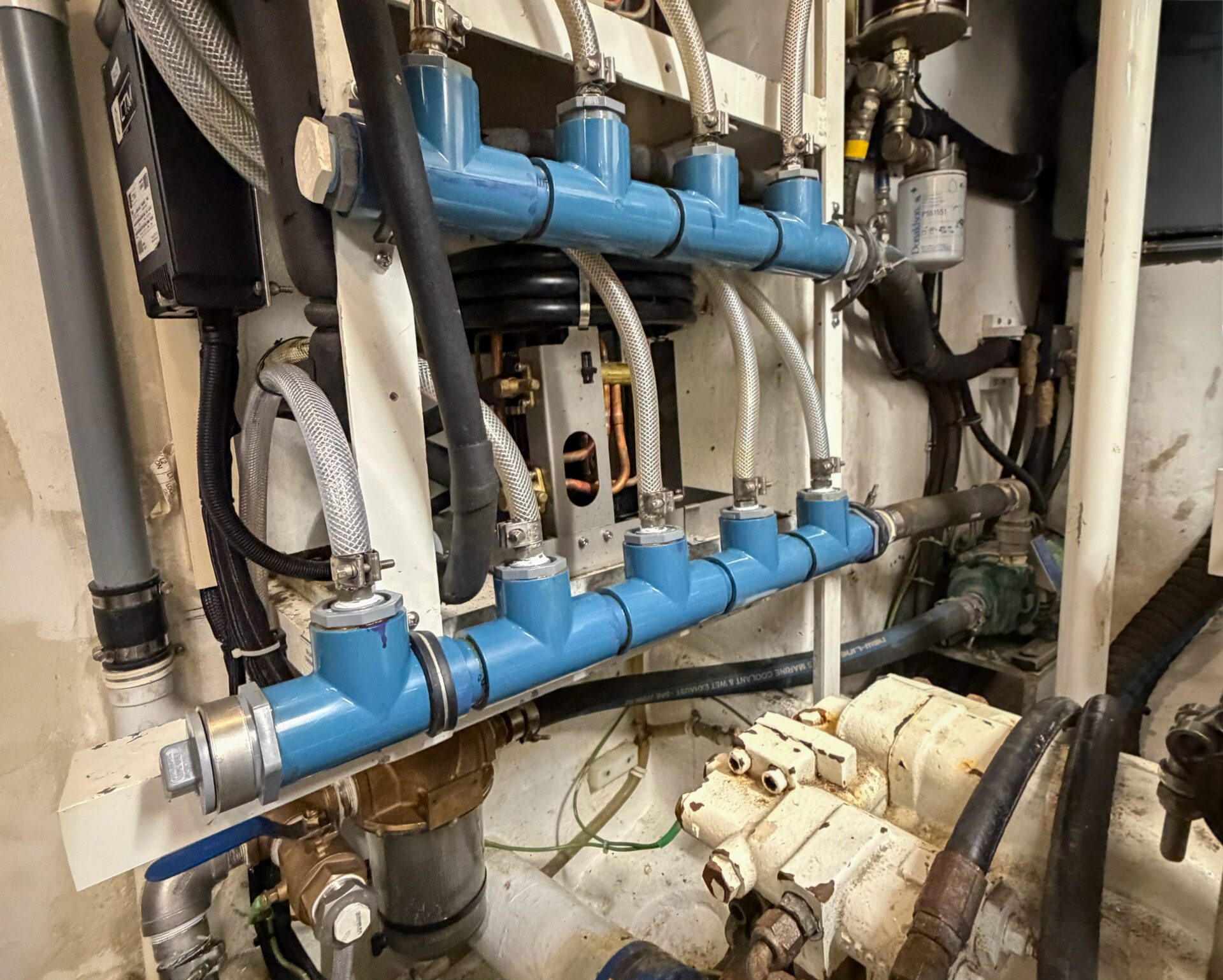
Marine air conditiong systems rely on raw water to cool compressors and condensers. Over time, mineral scale and marine growth accumulate inside these cooling lines, restricting water flow and reducing cooling efficiency.
For vessels operating in saltwater environments, routine marine AC (Air Conditioning) flushing and descaling is an essential part of preventative maintenance. Without it, restricted flow can lead to overheating, premature pump failure, and costly repairs.
A properly performed marine AC flush protects cooling efficiency, reduces strain on system components, and demonstrates how integrated system design, simplifies ongoing maintenance.
Why Marine AC Systems Need Regular Flushing
Marine air conditioning systems draw sea water through:
- Raw water pumps
- Sea water strainers
- Condenser coils
- Discharge manifolds
Saltwater contains dissolved minerals and supports marine growth. Over time, this leads to:
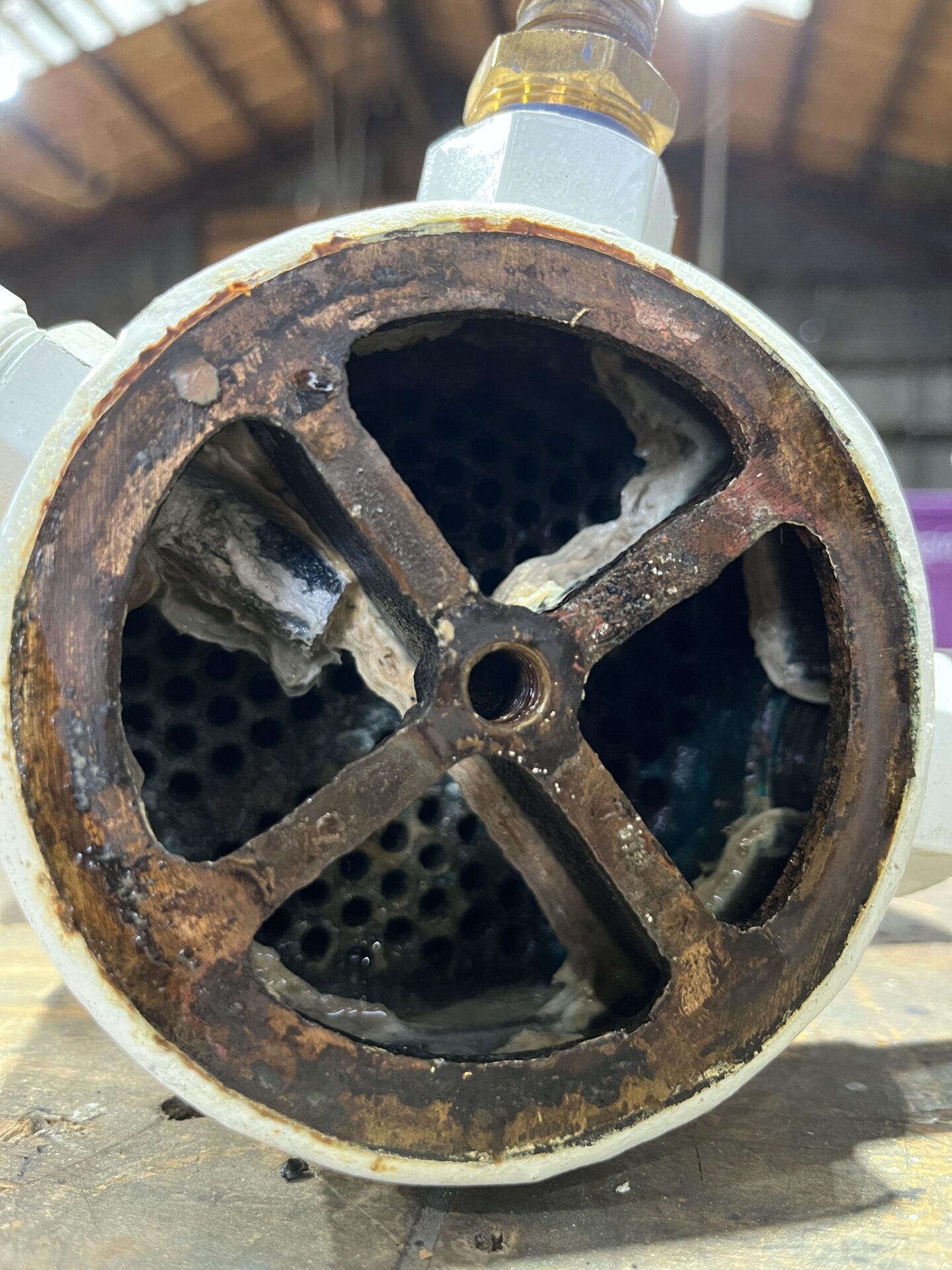
- Calcium and mineral scale buildup
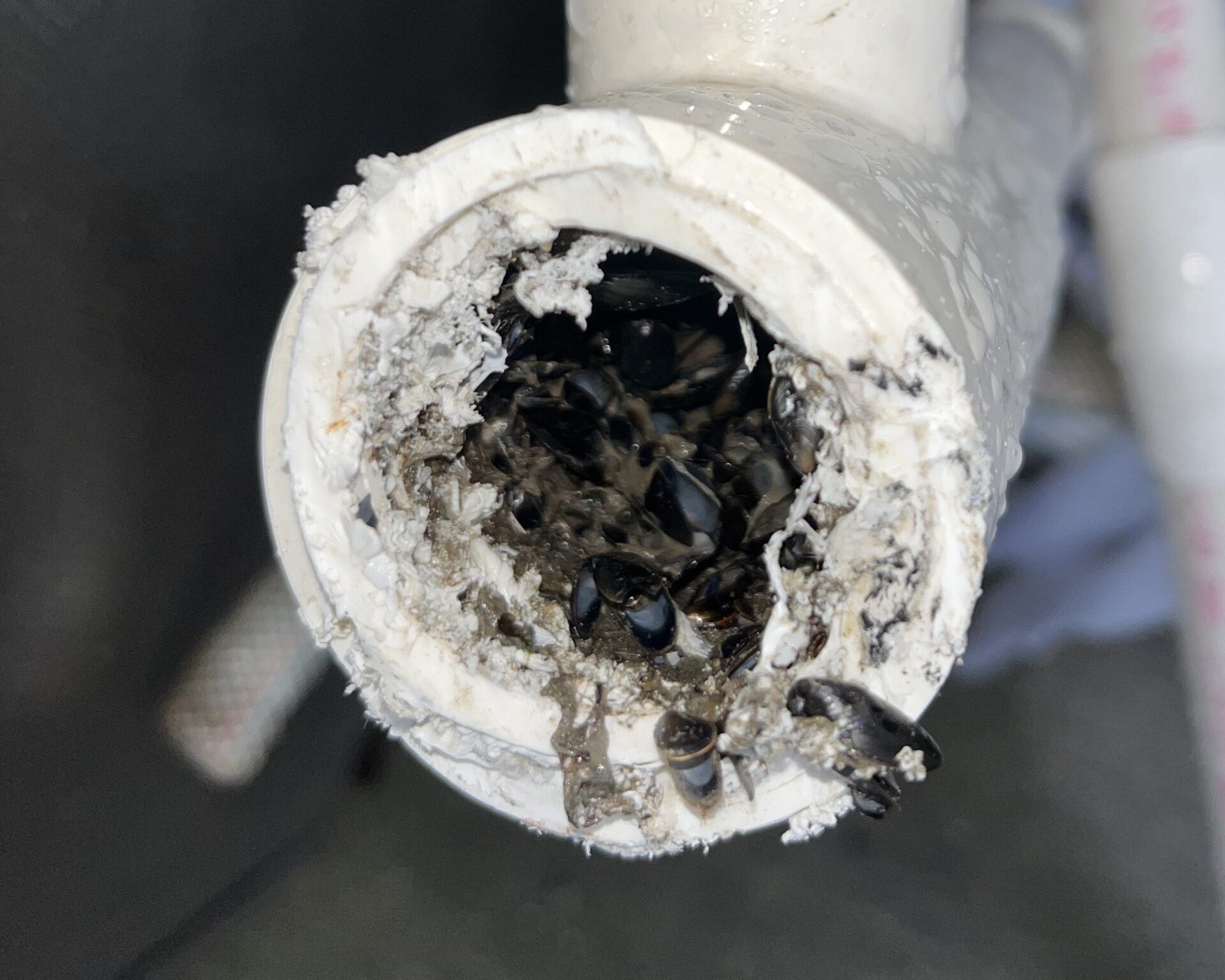
- Barnacle, Mussels, and other organic growth inside lines
- Restricted water flow
- Reduced cooling efficiency
- Increased strain on pumps and compressors
Even if discharge appears normal, internal scale and growth may already be restricting flow.
If left untreated, this can result in overheating, premature equipment failure, and costly repairs.
Why Freshwater Flushing Isn't Enough
Freshwater rinsing can remove loose debris, but it does not dissolve hardened mineral scale or marine growth.
As part of an AC system upgrade on one of our client’s vessels, multiple freshwater testing flushes were performed earlier in the week. Despite this, once a final descalinlg flush was performed, significant buildup was still dislodged from inside the lines.
A marine-safe descaling solution is required to break down mineral deposits that freshwater alone cannot address. This is particularly important for vessels operating in saltwater environments.
Additionally, simply running freshwater through the system does not provide the controlled circulation necessary to clear internal cooling passages effectively. An active flush, using the system’s raw water pump or a dedicated circulation set up, ensures the solution moves through the entire circuit and dislodges buildup thoroughly.
How a Marine AC Descaling Flush Works
While procedures may vary slightly by vessel configuration, the general process includes:
1. Isolating the System
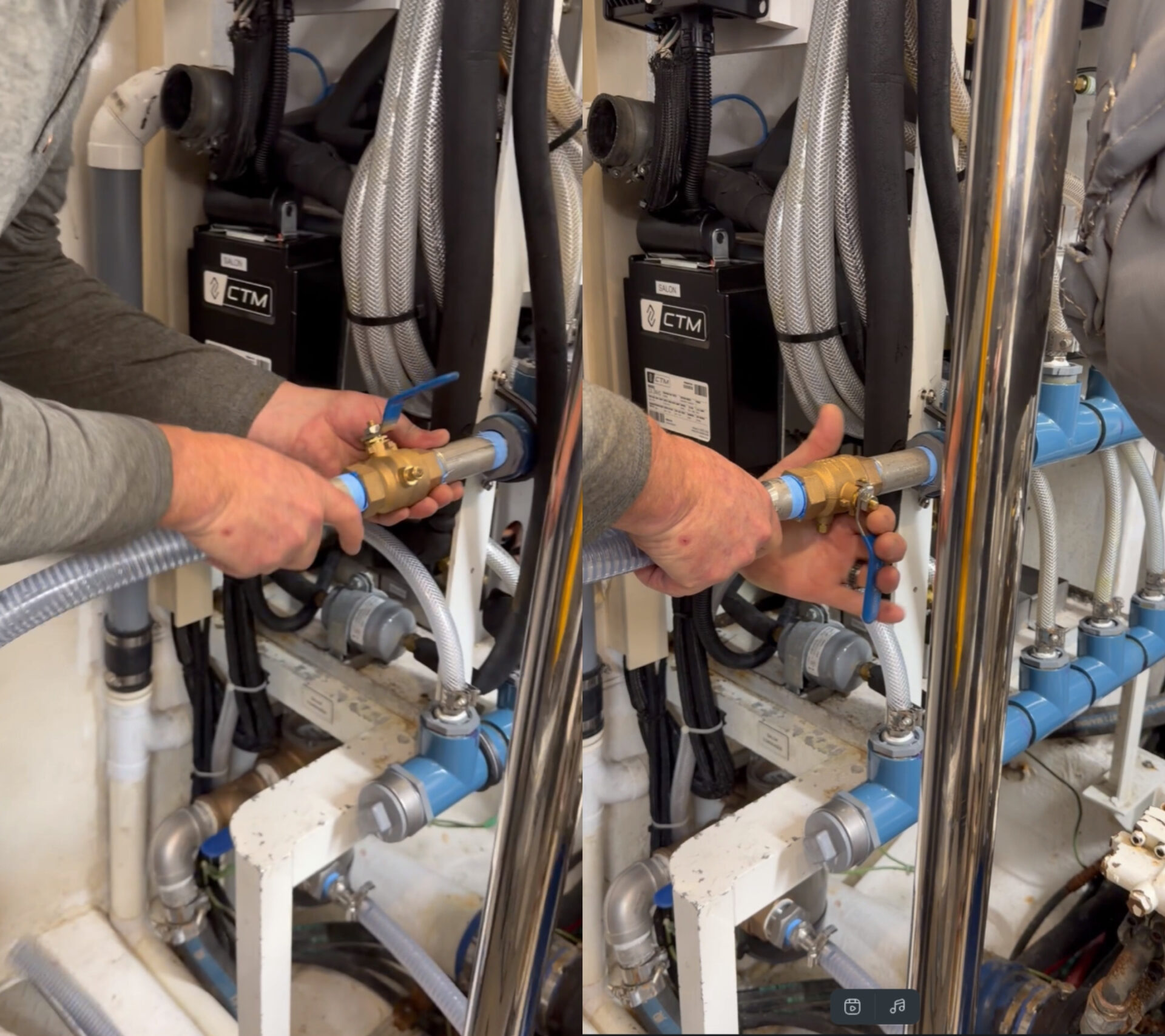
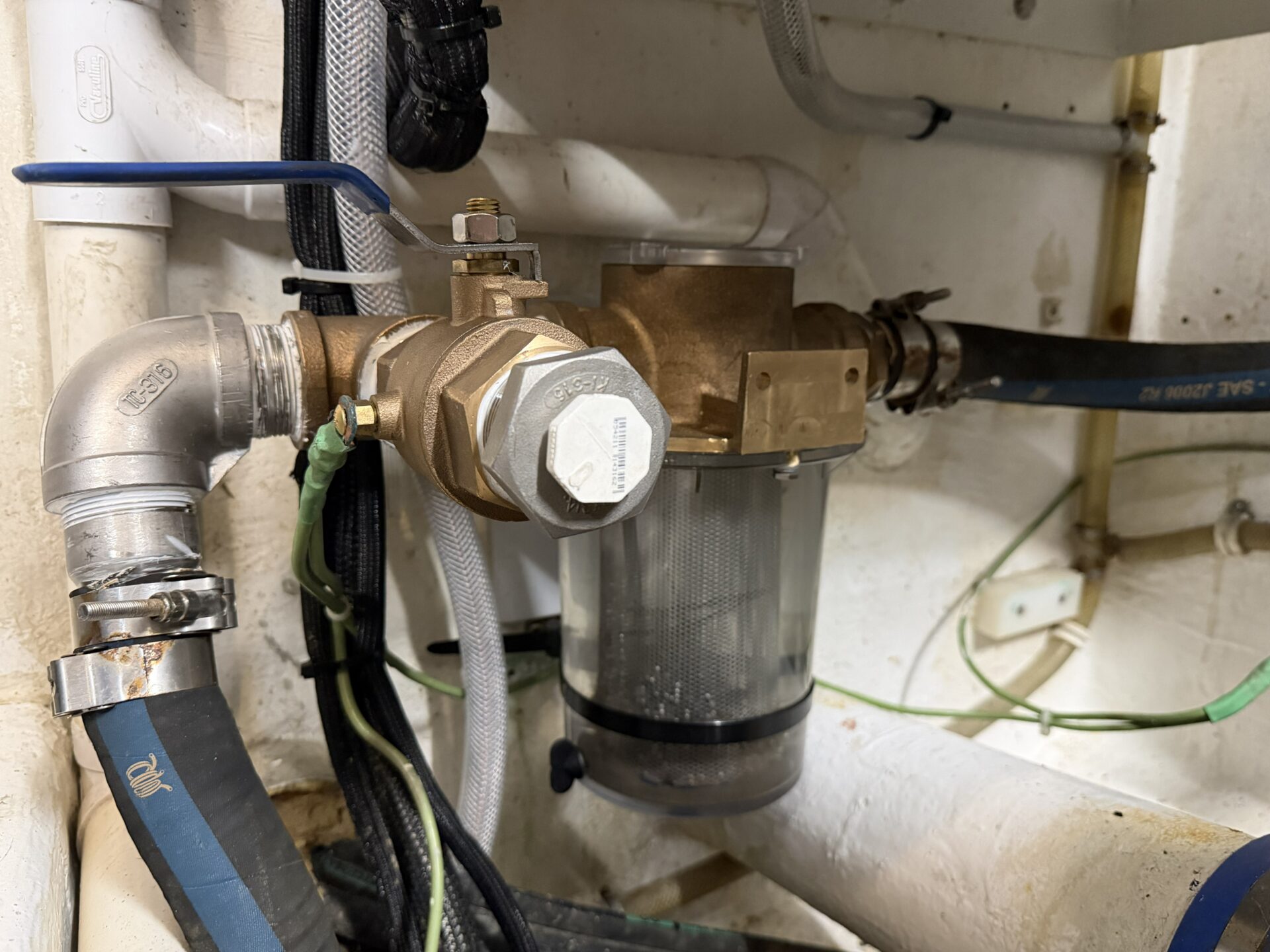
The intake and discharge ball valves are closed to separate the AC system from normal seawater flow. This allows the raw water circuit to be safely circulated with a descaling solution.
2. Connecting Circulation Hoses
Dedicated injection ports or hose connections are used to introduce the descaling solution into the system.
In traditional setups, this may require temporarily disconnecting plumbing. However, systems that are engineered with integrated flushing ports significantly simplify this step.
3. Preparing the Descaling Solution
A marine-safe, biodegradable descaling solution is mixed according to manufacturer recommendations. These products are formulated to dissolve:
- Mineral Scale
- Rust
- Barnacle Growth
- Organic Marine Buildup
At our shop, we typically use Trac’s Barnacle Buster Concetrated Solution.
4. Circulating the System
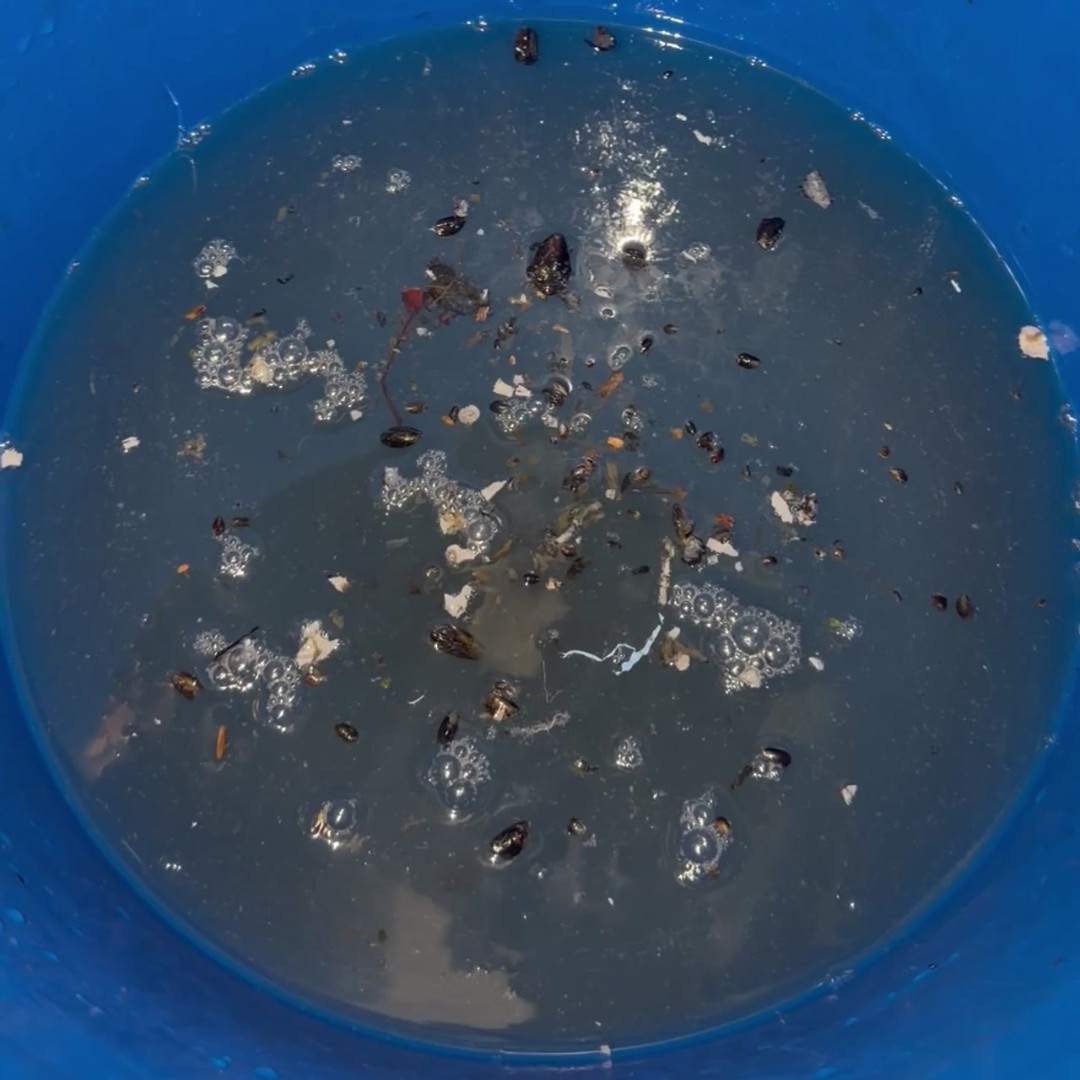
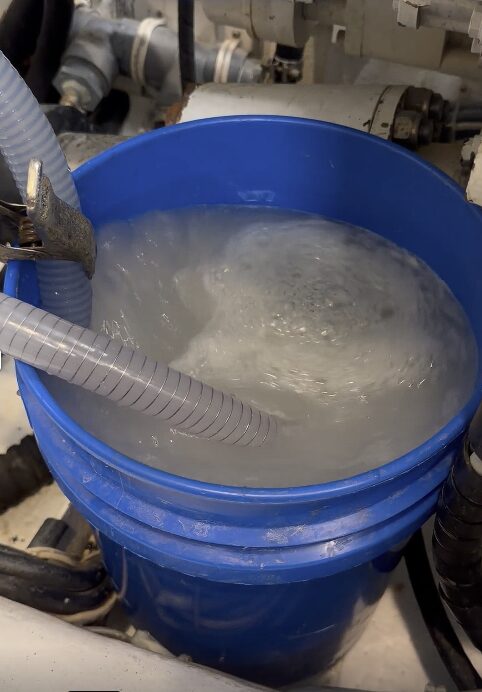
The existing raw water pump circulates the solution through the system. Each AC unit is flushed individually to ensure a thorough clean. Circulation typically continues for about 45 minutes per unit, or until discharge runs clear.
If heavy buildup is present, or if it has been a significant amount of time since the last flush, the valves can be closed to allow the solution to sit and soak for approximately 30 minutes or longer, depending on growth.
5. Sea Strainer Debris
During this process, loosened debris can often collect in the seawater strainer. The strainer is inspected and cleaned before returning the system to service.
6. Returning to Normal Operation
Flushing hoses are removed, valves are returned to their original positions, and the system is placed back into its normal operating state.
How Often Should a Marine AC System Be Flushed?
As a general guideline, flushing is recommended every six months, or sooner depending on:
- Significant salt water usage
- Reduced discharge flow
- Extended idle periods
Keeping an eye on discharge flow and cooling performance helps ensure flushing is performed at the right interval for how the vessel is used and where it operates.
The Importance of System Design
While flushing is critical, how the system is designed plays a significant role in how efficiently maintenance can be performed.
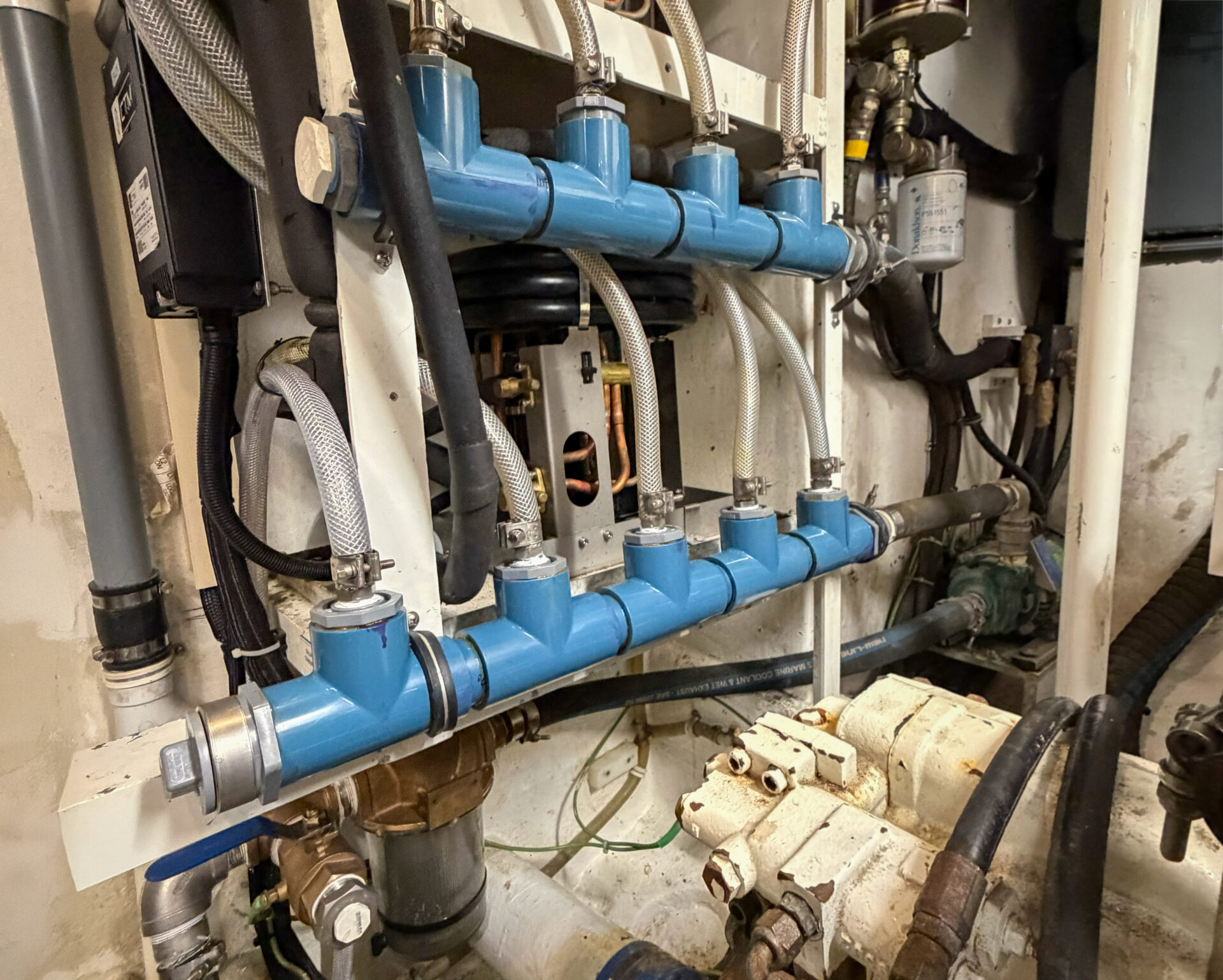
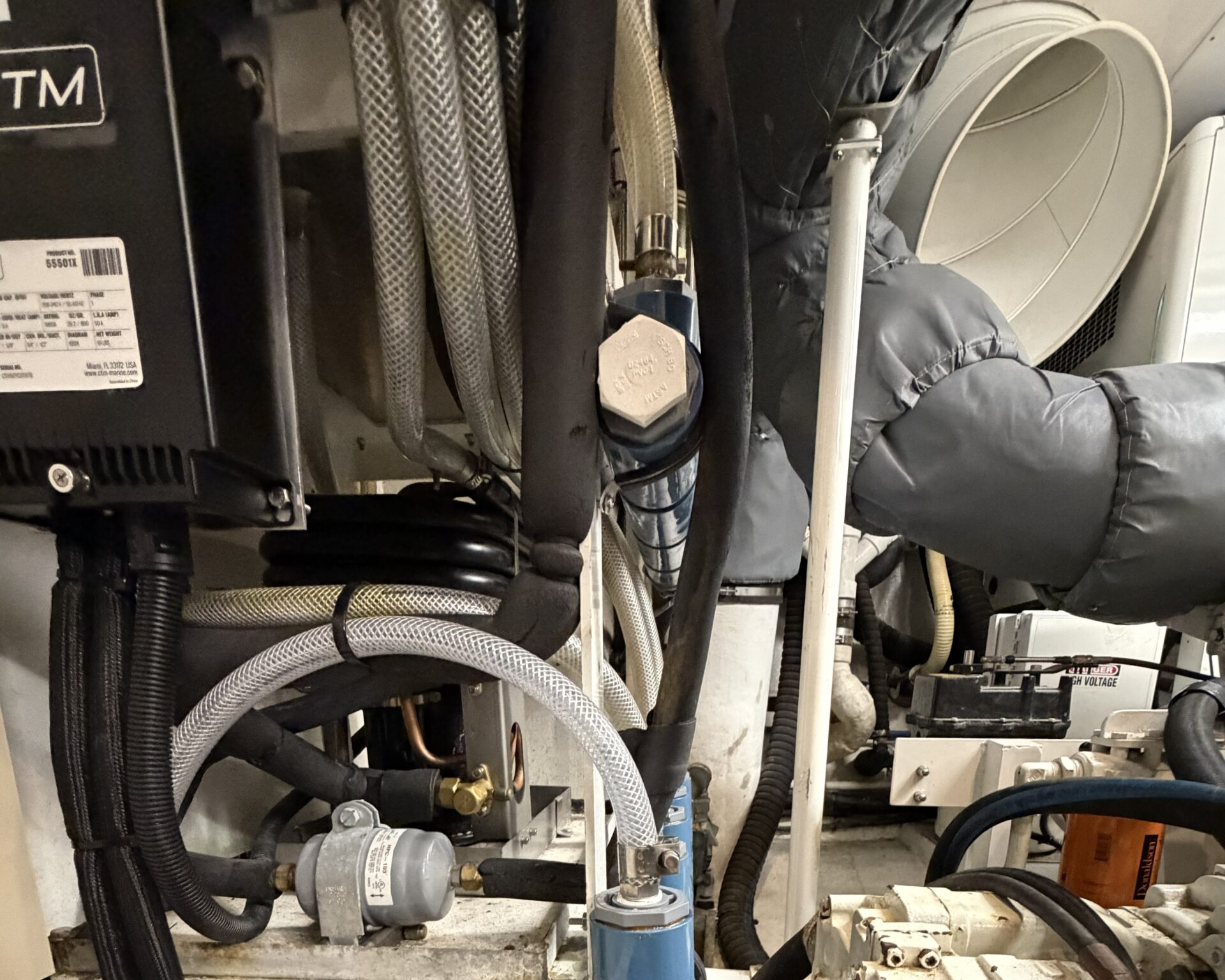
As part of that same Air Conditioning System upgrade project mentioned earlier, both discharge manifolds were rebuilt and re-orientated. Dedicated injection ports were integrated directly into the system so flush hoses can easily be connected and disconnected during service.
This allows:
- Full-system descaling without disconnecting permanent plumbing
- Controlled isolation using ball valves
- Cleaner and more efficient maintenance cycles
- Reduced future labour time
- Improved accessibility for captains and technicians
For vessels that remain in saltwater year-round, routine descaling is part of long-term equipment protection. Designing systems with integrated maintenance access ensures preventative service is practical — not postponed.
Protecting Long-Term Cooling Performance
Marine AC Systems are often out of sight and out of mind until cooling performance drops.
Routine descaling helps:
- Maintain efficient water flow
- Reduce strain on pumps and compressors
- Prevent overheating
- Extend equipment life
For vessels operating in saltwater environments, preventative maintenance is not just recommended, it’s necessary.
Frequently Asked Questions about Marine AC Flushing
How often should a marine AC system be flushed?
For vessels operating primarily in saltwater, flushing every six months is a common guideline. More frequent service may be required if discharge flow is reduced or after extended idle periods.
Can freshwater flush a marine AC system?
Freshwater can remove loose debris, but it does not dissolve hardened mineral scale or marine growth. A marine-safe descaling solution is required for a thorough flush. Even vessels operating in freshwater environments require a proper flush, as dirt and debris can still build up within the lines.
What happens if a marine AC system is not flushed?
Restricted water flow an reduce cooling efficiency and increase strain on pumps and compressors. Over time, this can lead to overheating, premature equipment failure, and costly repairs.
Is it necessary to disconnect the plumbing during a flush?
In many traditional setups, temporary hose disconnection is required. Systems designed with integrated flushing ports allow descaling to be completed without disturbing permanent plumbing, making routine maintenance more efficient.
Is flushing your AC System a Chore?
If you’re having troubles flushing your AC System, or considering how to better improve on basic marine engine maintenance for your vessel, our team can help evaluate your current configuration and recommend appropriate upgrades.
West Bay Shipyards has been helping boat owners on the West Coast—and beyond—for nearly 60 years. Based in Delta, BC, their legacy of building custom, world-class yachts has grown into a full-service shipyard, known for luxury refits, restorations, and repairs. Stay connected with West Bay Shipyards here or on social media for maintenance tips, project inspiration, or to get started on your next project.