
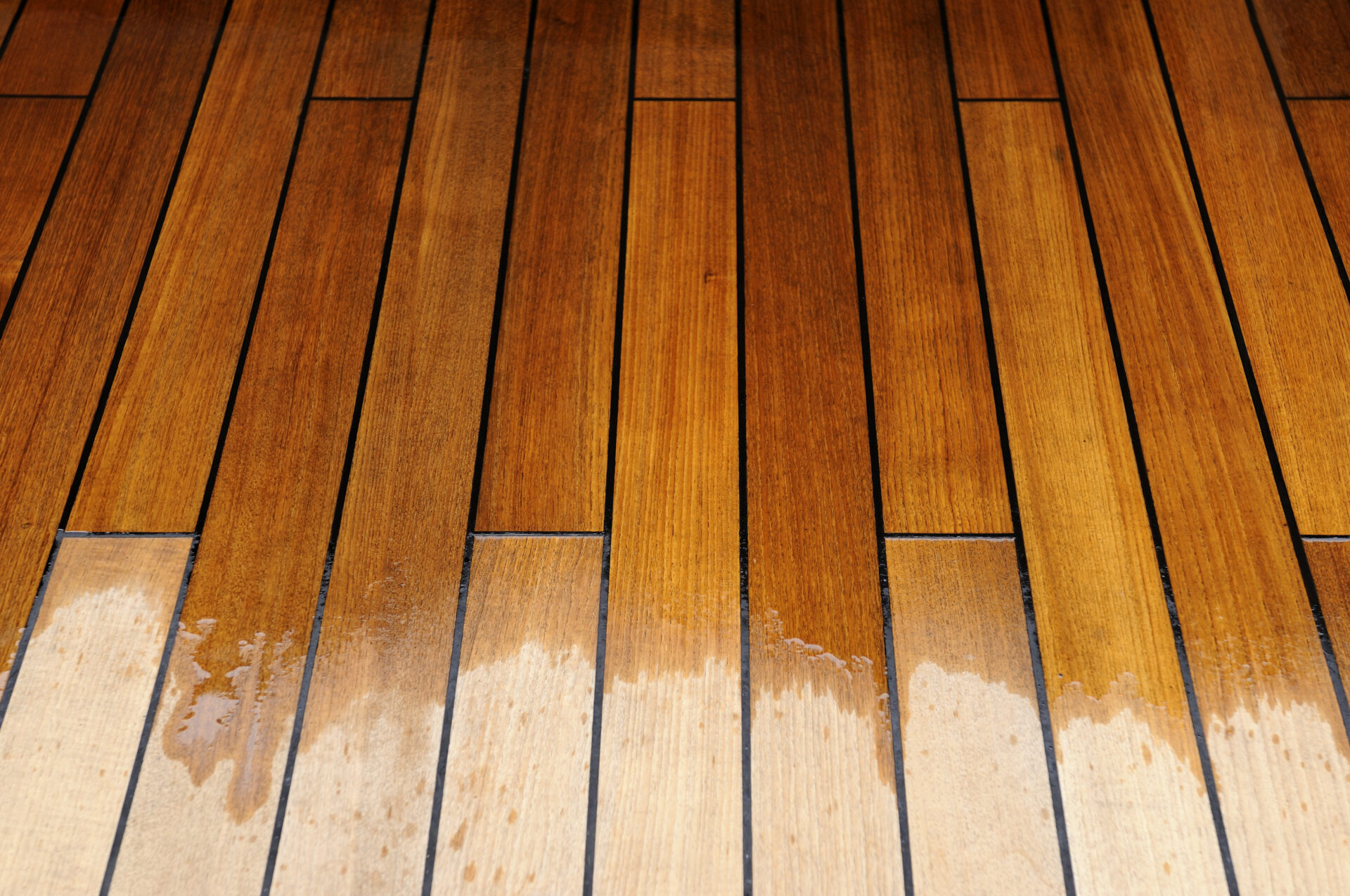
Teak decking is well known in the boating community for its durability, appearance, and natural resilience in marine environments. When properly maintained, a teak deck can last up to 20 to 30 years, depending on use and environmental conditions.
Most of the damage that occurs not caused by regular use, but by improper teak deck cleaning and maintenance. Despite its reputation, teak care is often more straightforward than people think, and a simpler approach is usually the one that helps preserve it best.
Maintaining the Look of Your Teak Deck
Before getting into cleaning, it helps to be clear on what you want your deck to look like.
Teak will naturally weather to a “silver-grey” over time. Some prefer the look of naturally faded teak, as it requires minimal intervention. This is often the lowest-impact approach in terms of long-term wear.
A lighter, “freshly cleaned” look can also be maintained but it requires more consistent upkeep. Regular cleaning helps preserve a more golden colour, but teak will always weather eventually, especially in harsher marine environments.
Sanding is sometimes used to restore colour, but it isn’t part of routine maintenance. Over time, sanding removes material and can significantly shorten the life of the deck if over-sanded.
Sealants and oils can help maintain a more consistent appearance, but they introduce their own maintenance requirements and aren’t necessary for every approach.
Neither approach is inherently better or worse for the longevity of the deck. The difference comes down to how it’s maintained. A lighter finish can be maintained without significantly increasing wear when done properly, while mroe aggressive methods can shorten the deck’s lifespan regardless of approach.
Regardless of your visual preference, the key is choosing an approach that matches both the look you want, and the level of upkeep you’re comfortable with.

Routine Cleaning
For most vessels, routine cleaning does not need to be complicated.
A regular rinse with fresh water helps remove salt and surface buildup, epecially after heavy use. When the deck starts to look dull or dirty, a light clean is usually enough. The key is how it’s done.
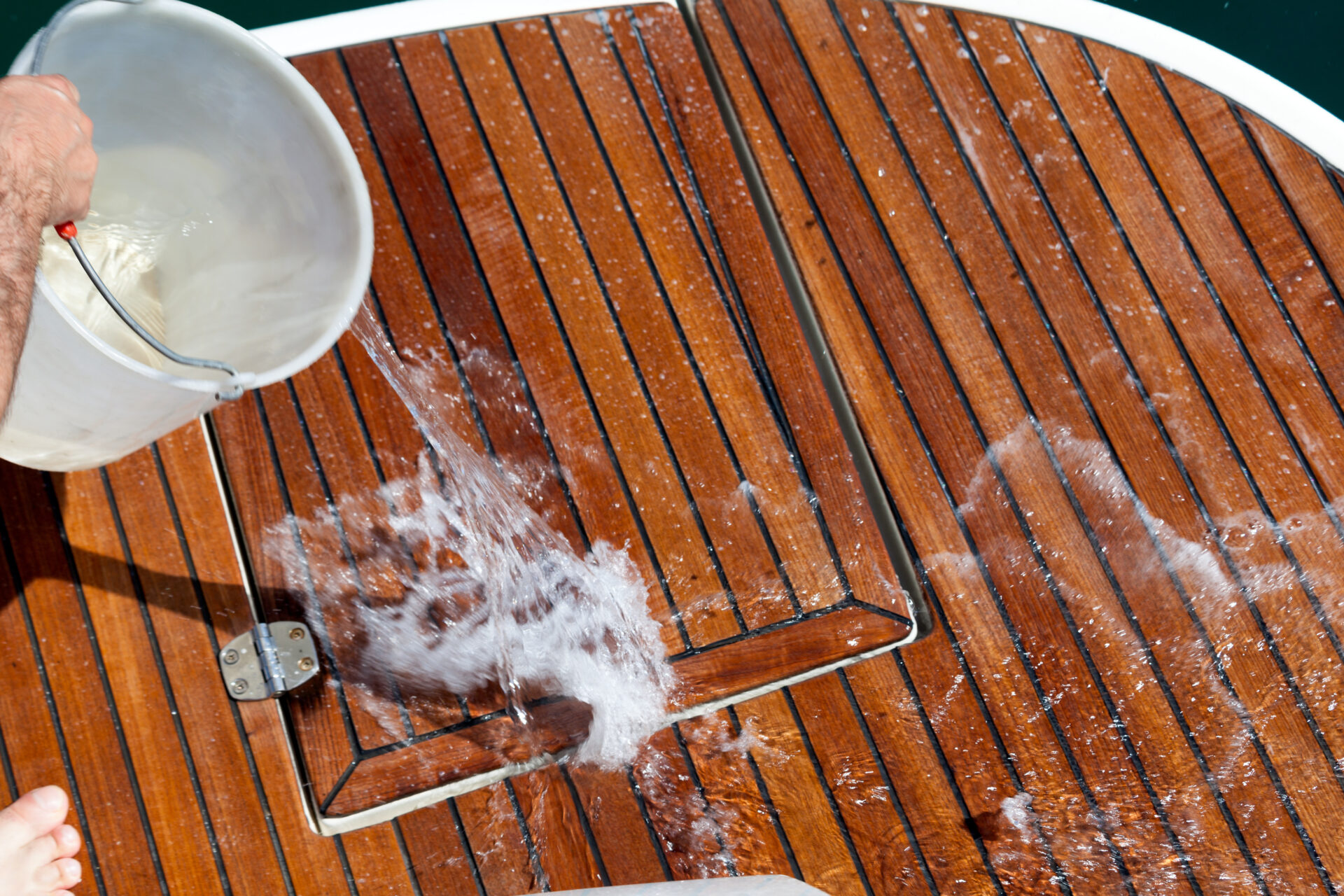
1. Rinse With Fresh Water
Every cleaning session should begin with a thorough fresh water rinse. This removes surface dirst, salt, and other contaminants that accumulate with use.
Starting with a proper rinse reduces the amount of scrubbing required, which helps protect the surface of the teak and minimizes unnecessary wear.
2. gentle scrub
This is where most teak damage occurs, so the approach matters.
Using a soft-bristled brush and a mild soap, gently scrub the deck. Always work across the grain, not along it.
Teak’s natural anti-slip surface comes from its soft surface fibers. Scrubbing with the grain pushes against these fibers, wearing them down and removing them prematurely. Stiff brushes have the same effect, which is why a softer brush is recommended.
Let the soap do the work rather than relying on pressure. Teak is durable, but the surface is not mean tot be aggressively scrubbed.
3. Final Rinse
Once scrubbed, rinse the deck thoroughly with fresh water to remove any remaining soap and loosened debris.
Over time, it’s not the environment that causes the most wear — it’s how the deck is cleaned. Keeping the process light and consistent will help preserve both the appearance and lifespan of the teak.
Deeper Cleaning
This is typically only needed when:
- The deck has developed uneven colouring
- Dirt has built up beyond what a light clean can remove
- The surface is looking consistently dull
For most vessels, this might mean once or twice a year, depending on use and environment.
Using a Teak Cleaner
These products are more aggressive than regular soap and are designed to break down embedded grime and brighten the wood. Because of this, they should be used carefully:
- Follow product instructions closely
- Work in small, manageable sections
- Apply gently, scrubbing across the grain
- Rins thoroughly between steps
Teak cleaners are effective, but they’re not meant for frequent use. Overuse can accelerate wear by removing more material than necessary.
Rinsing and Drying
After cleaning, a thorough rinse is essential to remove any remaining product from the surface.
Once rinsed, allow the deck to fully dry before assessing the result. Teak can appear uneven while wet, and evaluating it too early can lead to unnecessary repeat cleaning.
Deeper cleaning should act as a “reset”, not part of a regular routine. When used sparingly, and correclty, it can improve the apprearance of the deck without contributing to unnecessary wear.
Handling Stains and Problem Areas
Some areas will need more attention than others. High-traffic zones, oily spots, or areas that stay damp can develop staining, mildew, or discolouration.
In cooler coastal environments like the BC coast, where frequent rain and lower temperatures slow drying, moisture tends to sit on the surface longer. This makes deck more prone to mold and mildew buildup.
For most cases, targeted spot cleaning is enough. For more persistent staining, a stronger cleaning method can be effective when used carefully.
One approach we use for heavily soiled areas is a diluted bilge cleaner solution:
- Mix approximately 1/2 cup of bilge cleaner per gallon of water
- Apply to the affected area and scrub gently across the grain
- Use only as needed, and avoid applying it across the entire deck unless required
This solution is particularly effective at breaking down oily residue and addressing mold or mildew.
Because bilge cleaners are more aggressive, they should be used with caution. For more severe buildup, a slightly stronger concentration can be used, but it’s important to test a small area first.
As with any cleaning method, always rinse thoroughly before and after application to remove debris, and any remaining cleaner from the surface.
Common Mistakes to Avoid
Pressure Washing
This strips away the soft surface fibers quickly, leaving the deck rough and shortening its lifespan.
Scrubbing with the grain
This pulls up the wood fibers instead of cleaning them.
Harsh Chemicals (bleach, strong acids)
These remove the natural oils in the wood and can prematurely affect both the colour and structure of the teak.
over-cleaning
Teak is durable, but the surface fibers are soft. The more aggressively it’s scrubbed, the faster it will wear down.
Final Thoughts
There’s no shortate of opinions on how teak should be maintained. In practice, the approach that works best is often the simplest one.
Keep it clean, avoid unnecssary wear, and adjust your routine based on how your deck is performing.
If you’re deciding between different approaches, sealants, or how to maintain a specific look, that’s where things become more nuanced. We’ve broken that down in a separate blog which you can read more of here: Keeping Your Teak Decking in Bristol Condition.
FAQ: Teak Deck Cleaning
How often should I clean my teak deck?
If you’re maintaining a lighter finish, cleaning may be more frequent, but it should still be done gently. Deeper cleaning is typically only needed once or twice a year. This is often done in the spring to remove any buildup from winter, and again in the fall while conditions are still mild.
When planning a deeper clean, it’s important to allow the deck to fully dry afterward. In cooler, damp conditions, ensuring the surface has time to dry helps reduce the risk of mold or mildew developing during storage.
Can I use a pressure washer on teak decking?
Can I sand my deck to remove dirt?
Is it better to leave teak "natural" or more "golden"?
Should I use teak oil or sealants?
What's the best way to deal with stubborn stains or mildew?
Does cleaning teak more often wear it out faster?
That said, neglecting regular cleaning can also lead to issues. Debris and surface buildup can wear down the wood over time, and areas that stay damp are more prone to mold or mildew. While teak is naturally resistant, it’s not impervious. If left untreated, this kind of buildup can penetrate the surface and lead to more significant deterioration over time.
Can I clean my teak deck with salt water?
If left on the deck, it can settle into the wood fibers and contribute to weathering over time. Frequent use of salt water can lightly “bleach” the teak, especially when it dries in direct sunlight. If you prefer a more grey or weathered look, this may not be a concern.
If you’re aiming to maintain a more golden finish, frequent use of salt water is generally not recommended. If used, it should always be followed by a thorough freshwater rinse to remove any remaining salt and reduce the risk of accelerated weathering.
West Bay Shipyards has been helping boat owners on the West Coast—and beyond—for nearly 60 years. Based in Delta, BC, their legacy of building custom, world-class yachts has grown into a full-service shipyard, known for luxury refits, restorations, and repairs. Stay connected with West Bay Shipyards here or on social media for maintenance tips, project inspiration, or to get started on your next project.