
Water is one of the most damaging forces aboard a vessel, and one of the easiest to overlook.
Unlike a mechanical failure that announces itself with an unsual alarm, noise, or loss of performance, water damage tends to develop quietly. A small leak behind a panel or beneath a fitting can go unnoticed for months before any obvious signs appear.
By the time you notice a stain on a wall or swelling around cabinetry, the water may have travelled a considerable distance from where it first enterd.
That’s why a professional inspection looks for where the water originated, not just where the first signs of damage appear.
Water Leaves Clues
The reality is that water will always find a way. Following gravity, it can travel through bulkheads, behind liners, beneath flooring, or along any other path of least resistance. This means the stain you can see is often the end of the leak, not the beginning.
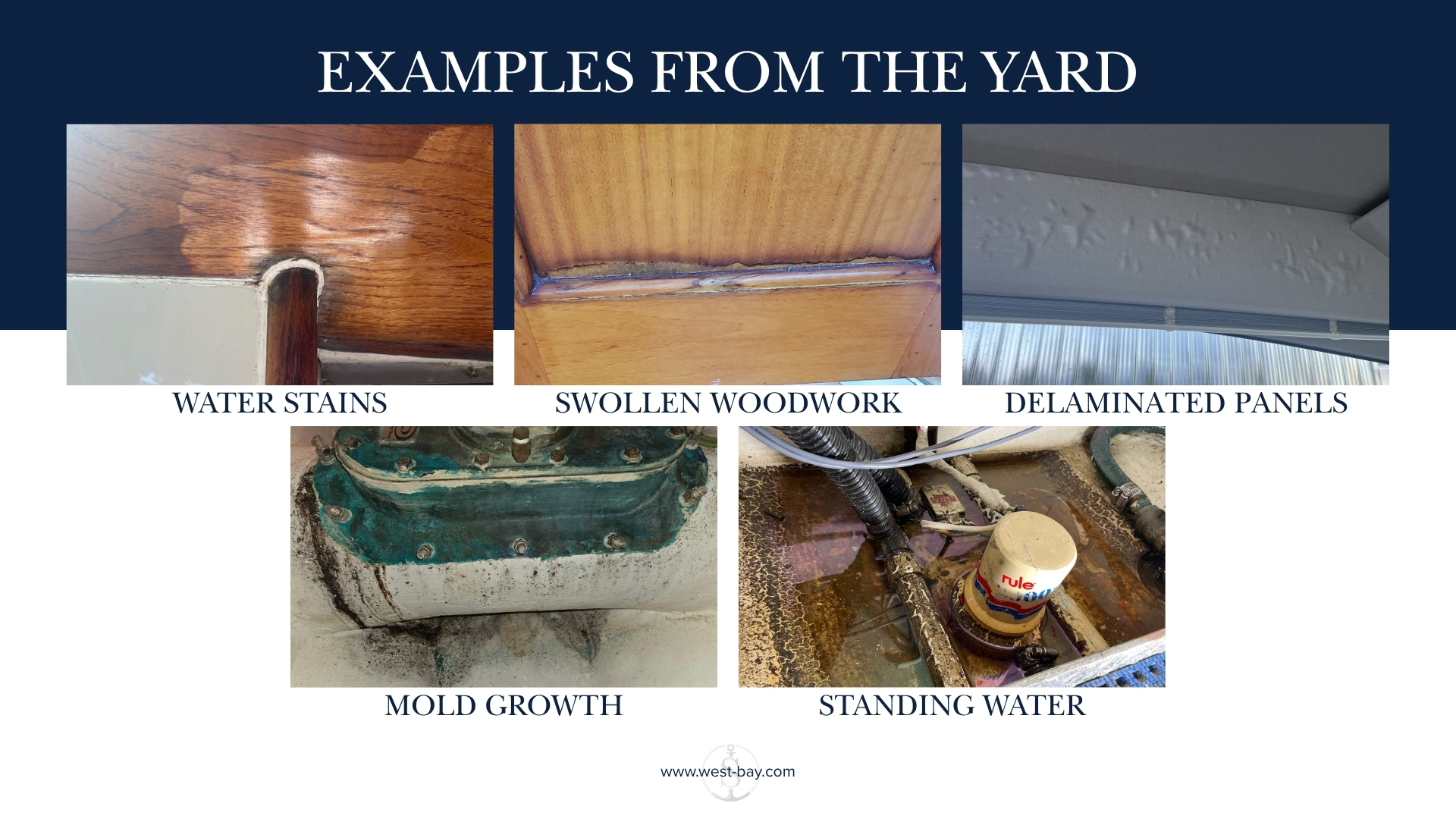
Some of the most common clues include:
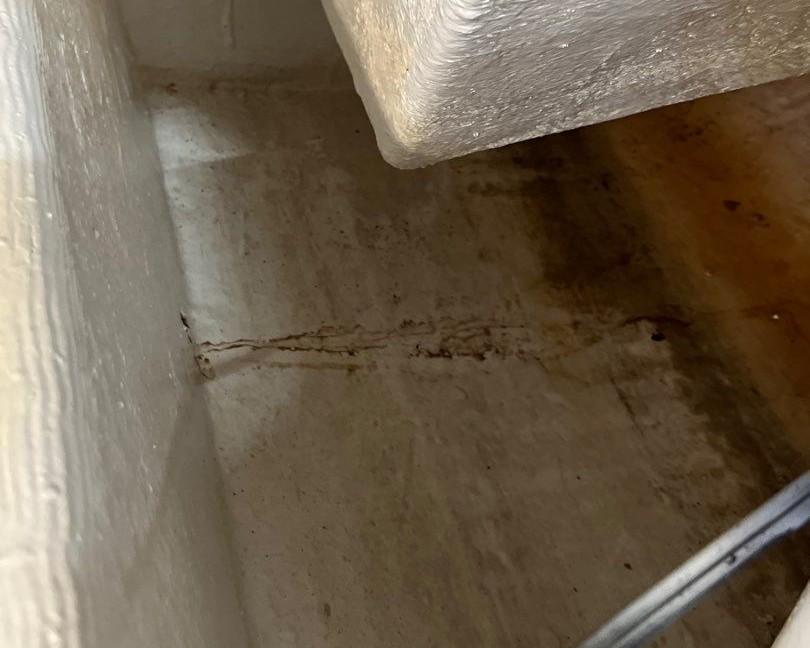
- Water stains or discolouration
- Swollen or delaminated wood panels
- Soft surfaces — particularly beneath flooring and cabinetry
- Persistent musty odours
- Standing water in unexpected places
On their own, these signs don’t always indicate a major problem, but they should never be ignored, as they are sometimes symptoms of a bigger issue.
Your Vessel's First Line of Defence
Keeping water out of your vessel depends on the reliability of several components working together. Thru-hulls, hoses, clamps, deck fittings, and bilge pumps all play an important role in controlling where water belongs.
For example, a bilge pump may be operating perfectly, but if its discharge hose is restricted or improperly routed, it may not remove water as efficiently as inteded. Likewise, a sound hose can still become a point of failure if the clamp securing it has corroded or loosened over time.
This is why it’s important to look beyond individual components, to ensure these systems are working together effectively.
Small Leaks — Big Repairs
Water has a way of turning relatively minor issues into much larger ones.
Left unaddressed, even a slow leak can lead to swollen woodwork, damaged interior finishes, mould growth, deterioated insulation, or structrual repairs that extend well beyond the source of the problem.
In many cases, the cost of repairing the damage far exceeds the cost of fixing the leak itself. That’s why early detection is so valuable. Identifying potential leaks or water intrustion risks before they become a problem can help prevent costly repairs later on.
What Owners Can Watch For
Pay attention to changes such as:
- New stains or discolouration
- Damp lockers or cabinetry
- Musty odours
- Bilge pumps cycling more frequently than normal
- Moisture around windows, hatches or deck hardware
While these signs don’t automatically indicate a serious problem, they do suggest it’s worth taking a closer look before a small issue has the opportunity to grow.
Water Tells A Story
Water damage rarely appears overnight, and it rarely stays where it starts.
Understanding how water moves through a vessel, and recognizing the early warning signs, can help prevent minor issues from becoming major repairs.
The sooner changes are investigated, the more options there are to address the cause, protect your vessel, and preserve your investment.
Looking Ahead
Understanding what to look for is one of the simplest ways to help prevent costly repairs and make the most of your time on the water. Our “Mechanical Matters” series takes a closer look at the systems, warning signs, and common issues we encounter every day in the yard, helping you better understand what your boat may already be trying to tell you. If you’d like to learn more about how to protect your vessel, explore the rest of the series below.
FAQ: Water Damage
What causes water damage on a yacht?
Water damage can result from leaking deck fittings, windows, hatches, plumbing, air conditioning systems, hull penetrations, or deteriorated sealants. In many cases, the visible damage is only the symptom — the source may be from somewhere further away.
How do you find the source of water damage?
Find the source often involves tracing the path water has taken, rather than focusing only on where the damage appears. Water can travel through wiring, structural components, or hidden spaces before becoming visible, making a systematic inspection essential.
How can I tell if water has damaged my boat?
Discolouration, staining, musty odours, peeling finishes, soft surfaces, mould growth, or unexplained corrosion can all indicate moisture is present, even if the source isn’t immediately obvious.
Can water damage spread if the leak has stopped?
Yes. Moisture trapped inside walls, cabinetry, insulation, or structrual components can continue to cause deterioration even after the original leak has been repaired if the affected areas or materials are not properly dried or repaired.
When should I have water damage professionally inspected?
If you notice recurring leaks, unexplained stains, soft surfaces, persisten moisture, or signs of mould, it’s worth having the area inspected. Identifying the source early can help prevent more extensive repairs later.
Continue Reading: Mechanical Matters Series
What We Look for During a Mechanical Inspection
Learn what experienced technicians are actually looking for during a yacht mechanical inspection and why the small details often matter most.
Hidden Causes of Water Damage on Yachts
Discover how water finds its way into unexpected places, what warning signs to watch for, and how early detection can prevent costly repairs.
Five Warning Signs Your Engine Room Shouldn’t Ignore
Recognize five common signs that something may need attention before a minor issue turns into a major repair.
Small Signs That Can Lead to Expensive Repairs
Explore the subtle clues that can reveal developing problems long before they become obvious—and expensive.
Designing a Boat with Maintenance in Mind
See how thoughtful design and equipment placement can make routine maintenance safer, easier, and more cost effective.
Repair or Upgrade? Knowing When It’s Time to Modernize
Learn how to evaluate whether repairing existing equipment or investing in an upgrade is the better long-term decision for your vessel.