

When people think about custom teak decking, they usually picture the finished result: clean lines, warm natural colour, and a deck that instantly changes the feel of a vessel. What often goes unseen is how much precision happens before a single piece reaches the boat.
For many projects, especially larger vessels or offsite installations, the work begins long before installation day. At West Bay, our teak decking process is designed to create each section in advance, allowing much of the craftsmanship to be completed offsite before final fitting begins onboard.
That means greater flexibility, more efficient installation, and the ability to take on projects beyond the limits of our dock space.
Step 1: Scanning the Vessel
Each custom teak deck begins with careful scanning of the vessel. Using a handheld digital tool such as our 3D scanner, every deck area is documented in detail, so curves, hatch openings, edges, and transition points are accounted for before any material is cut.
Precision at this stage matters because even small inconsistencies can affect how the finished deck fits once installation begins. Unlike flat surfaces, vessel decks often include multiple angles, radiuses, and interrupted sections that must align cleanly once complete.
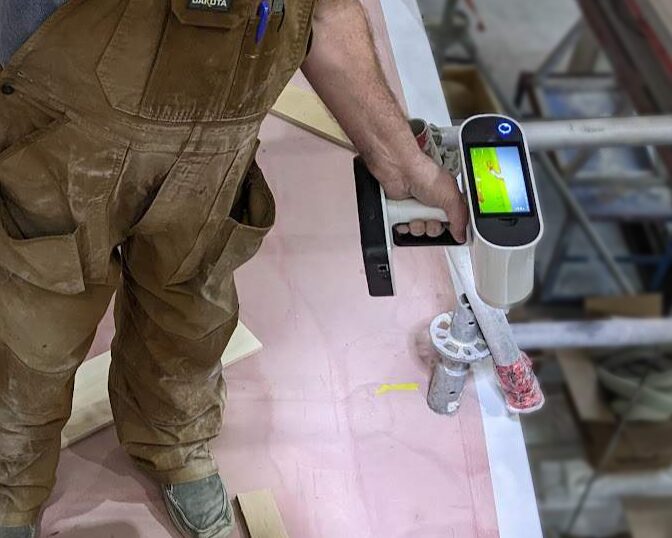
A finished deck only looks seamless when the planning behind it is exact.
Step 2: Creating Full-Size Templates
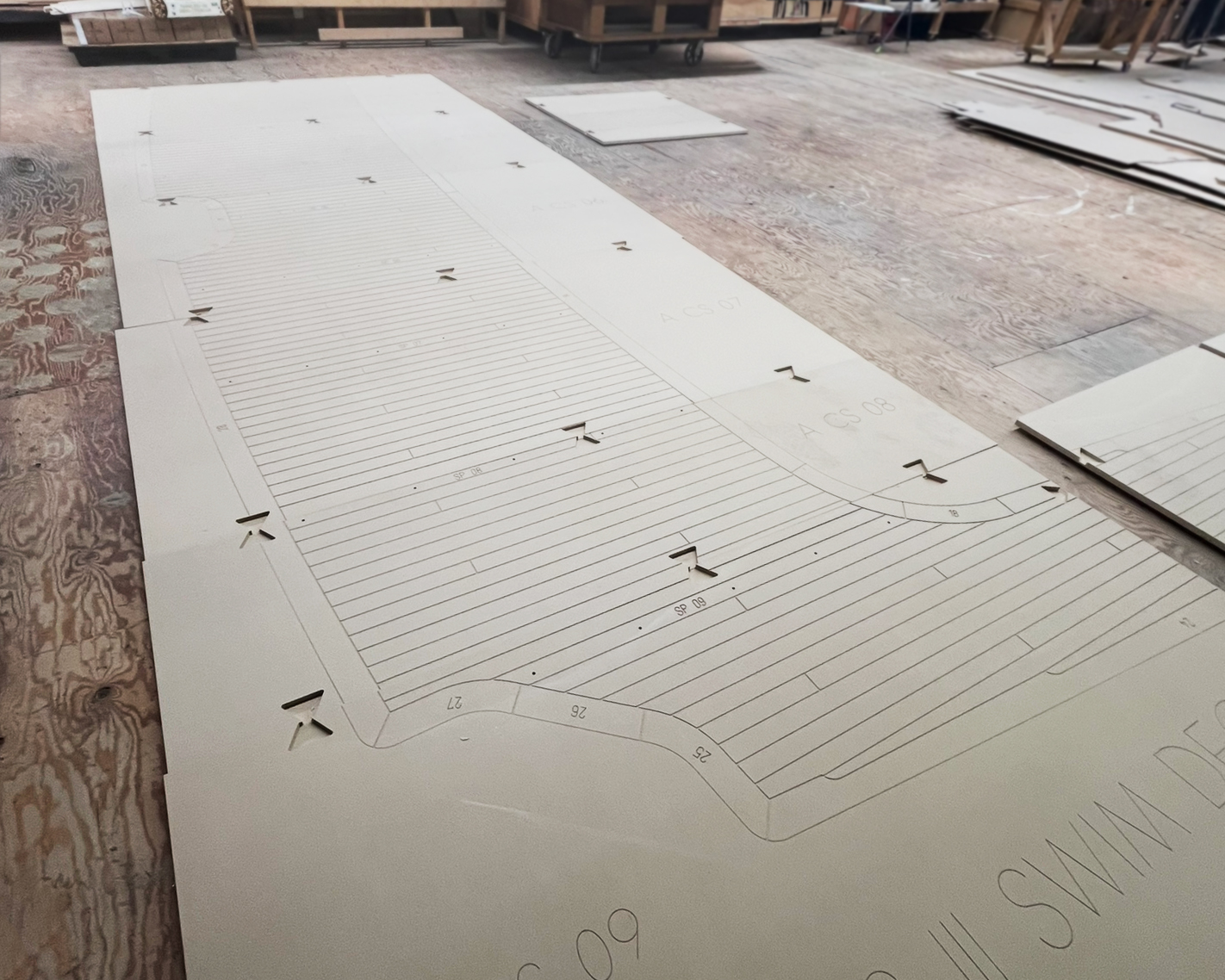
Once scanning is complete, templates are built for every decking area.
These templates act as full-scale guides, almost like puzzle pieces, representing each section of the vessel exactly as it will be installed later.
When laid out together, they form a complete map of the deck.
This stage allows the work to move from the vessel into the shop, where teak can be assembled under controlled conditions while maintaining the exact dimensions required for final installation.
Completing much of the fabrication in advance also helps improve efficiency during installation, reducing the amount of time spent working directly onboard. On the West Coast, where weather can shift quickly, that added control can help minimize avoidable delays during critical stages of the project.
Step 3: Building the Teak in Sections
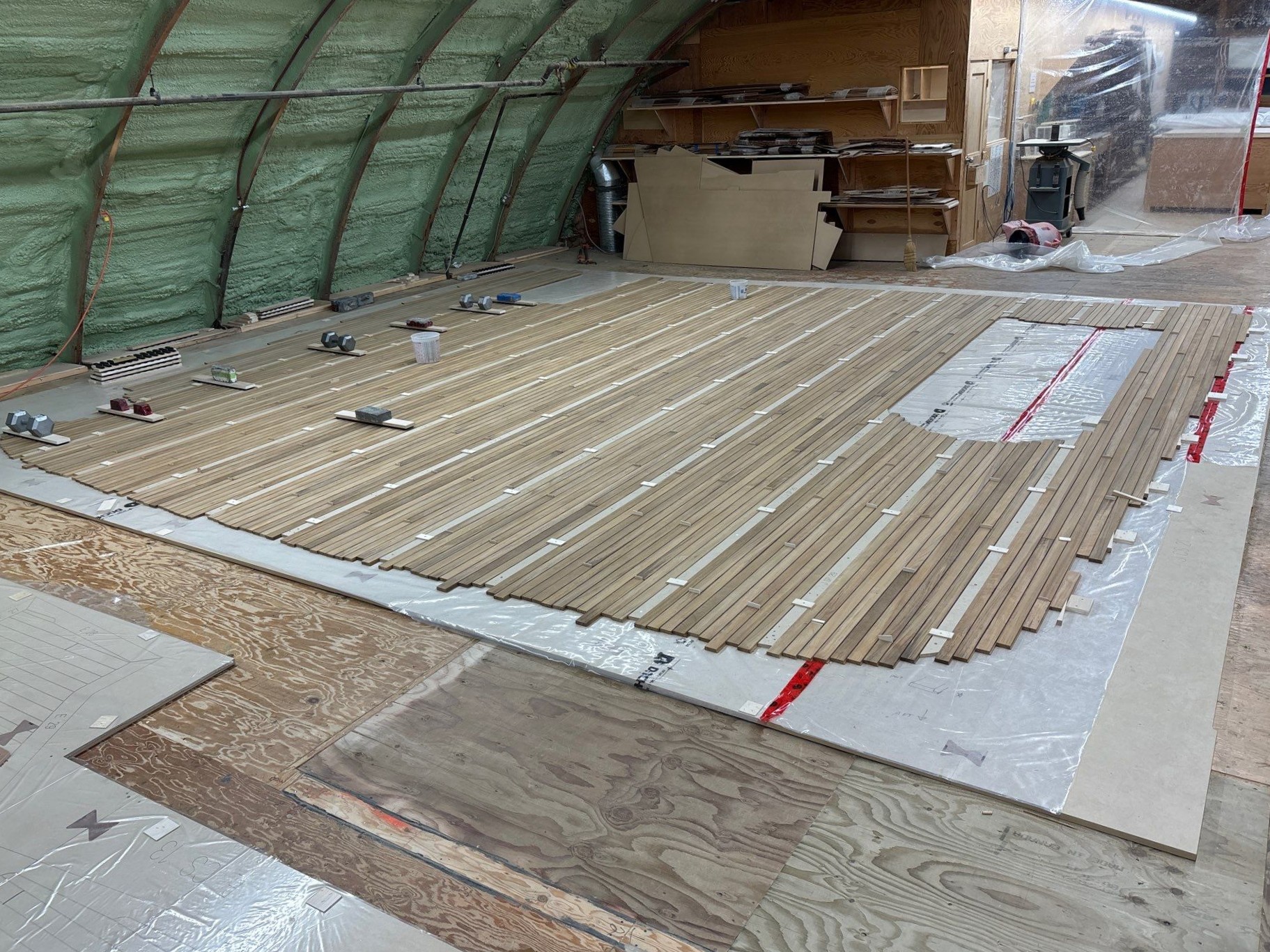
Using those templates, teak strips are laid and bonded together into larger sheets.
Rather than installing each strip individually onboard, sections are assembled in advance to create stable panels that can later be shaped to their final dimensions.
This approach helps maintain consistency across the deck while allowing careful control over spacing, alignment, and overall finish.
Because the work is built over full-size templates, each section already reflects the exact footprint of the vessel.
Step 4: Cutting Each Section to Match
With the teak assembled, each section is cut to reflect the exact shape of the area it will cover, from deck openings to changing edges and curves.
At this point, every section is essentially prepared as part of a larger puzzle, ready for transport and final assembly.
Step 5: Installation Onboard
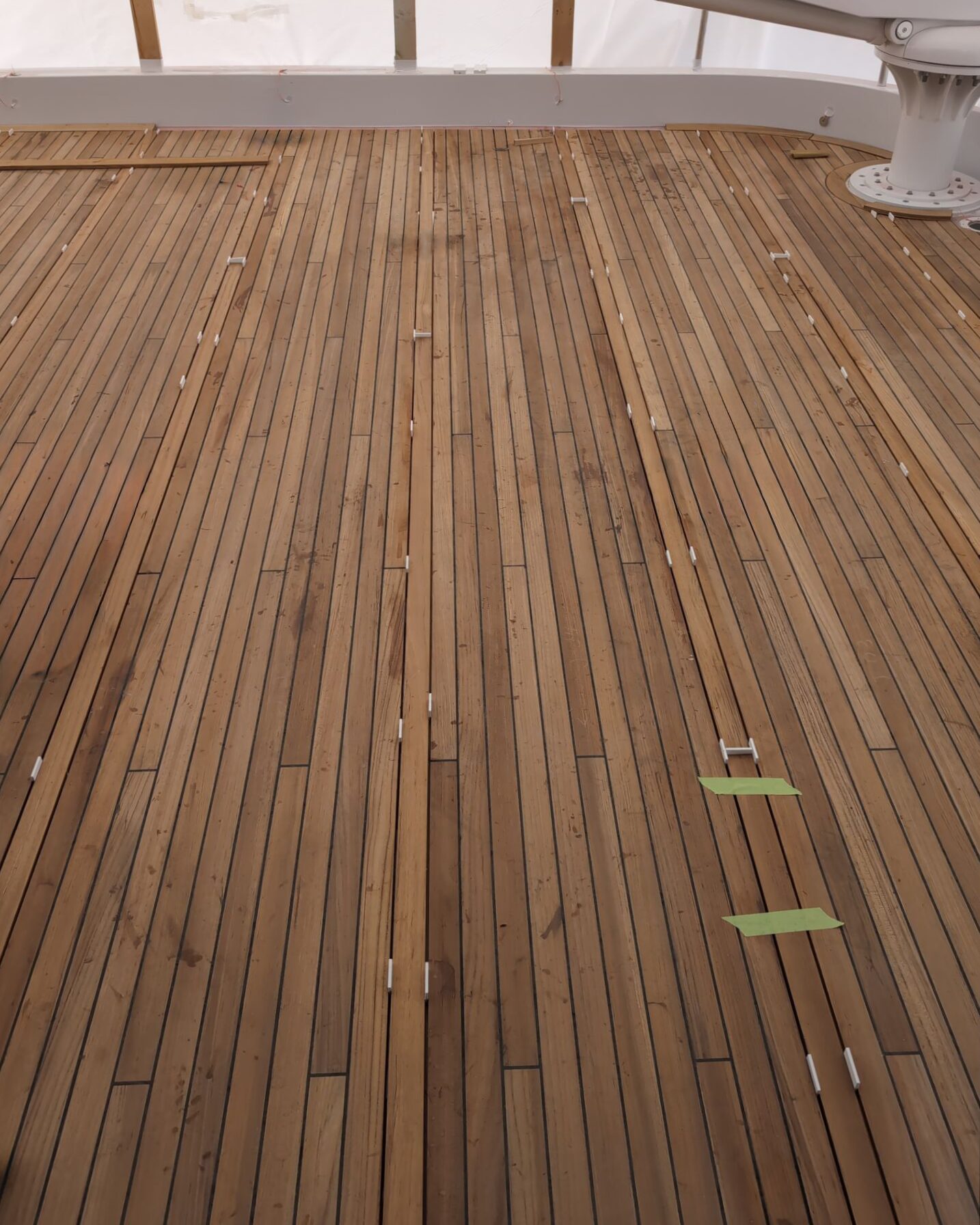
When the prepared sections reach the vessel, installation becomes a process of fitting those finished pieces together.
Each section is positioned according to the original layout, joined with neighbouring sections, and adjusted as needed during final finishing.
Because so much of the work has already been completed beforehand, installation can move more efficiently while still allowing for the fine detail work required onsite.

Built for Flexibility
One of the biggest advantages of this method is flexibility.
Because much of the teak deck is prepared before installation, the vessel does not need to remain in our dock for the full fabrication process.
It also allows us to accommodate projects on larger vessels or offsite locations where direct, full-time shop access would otherwise be limiting.
The result is what every teak project should deliver: a deck that looks clean, fits precisely, and is built to suit the vessel properly from the start.
Considering New Teak Decking?
Whether you are replacing an aging deck, updating a vessel during refit, or planning a new installation, careful preparation makes all the difference in the final result.
A well-built teak deck should not only look right on day one, but continue performing well through years of use.
Speak with us to learn more about custom teak decking and how we approach each project from first measurement to final fit.
Hi,
I have design for my teak deck that needs to be installed in the cockpit. Can I send you my drawing and you can give me a quote.
Kind regards
Alex
Hi Alex! Yes, we’d be happy to take a look and discuss further. Please send us an e-mail to info@west-bay.com with your drawing along with your vessel’s details, location etc., and our team will follow up with you.