
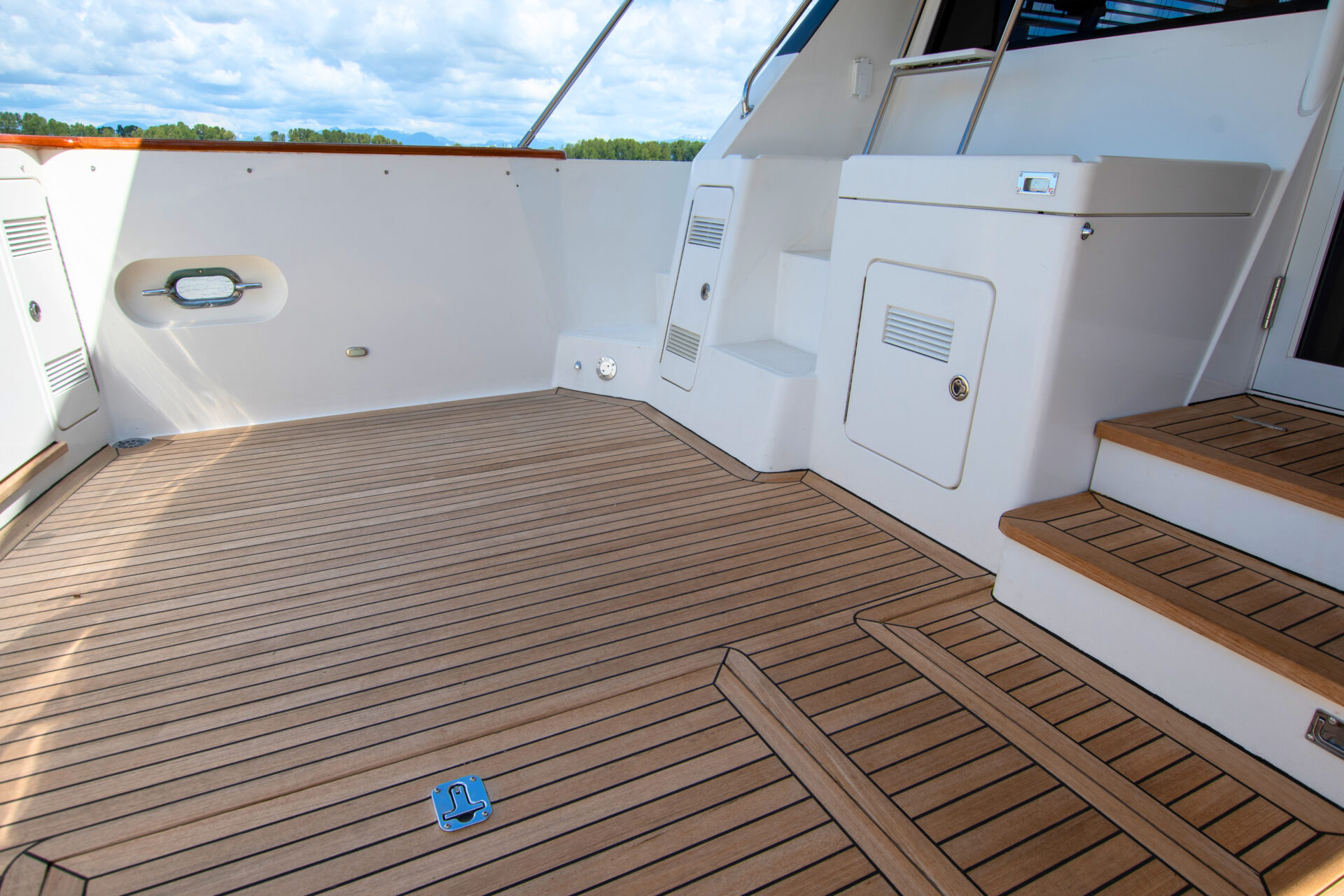
A damaged plank or an open seam can raise a big question for a yacht owner: “Do I need to replace my teak deck?”.
The answer is: not necessarily. When damage is limited and the surrounding deck remains in good condition, a targeted repair may be enough. In other cases, what appears to be a small surface issue can point to broader wear or problems beneath the teak.
The decision depends on more than appearance. Understanding the condition of the wood, the seams, and the underlying deck helps determine what a repair can realistically accomplish — and whether a replacement needs to be considered.
When Can a Teak Deck Be Repaired?
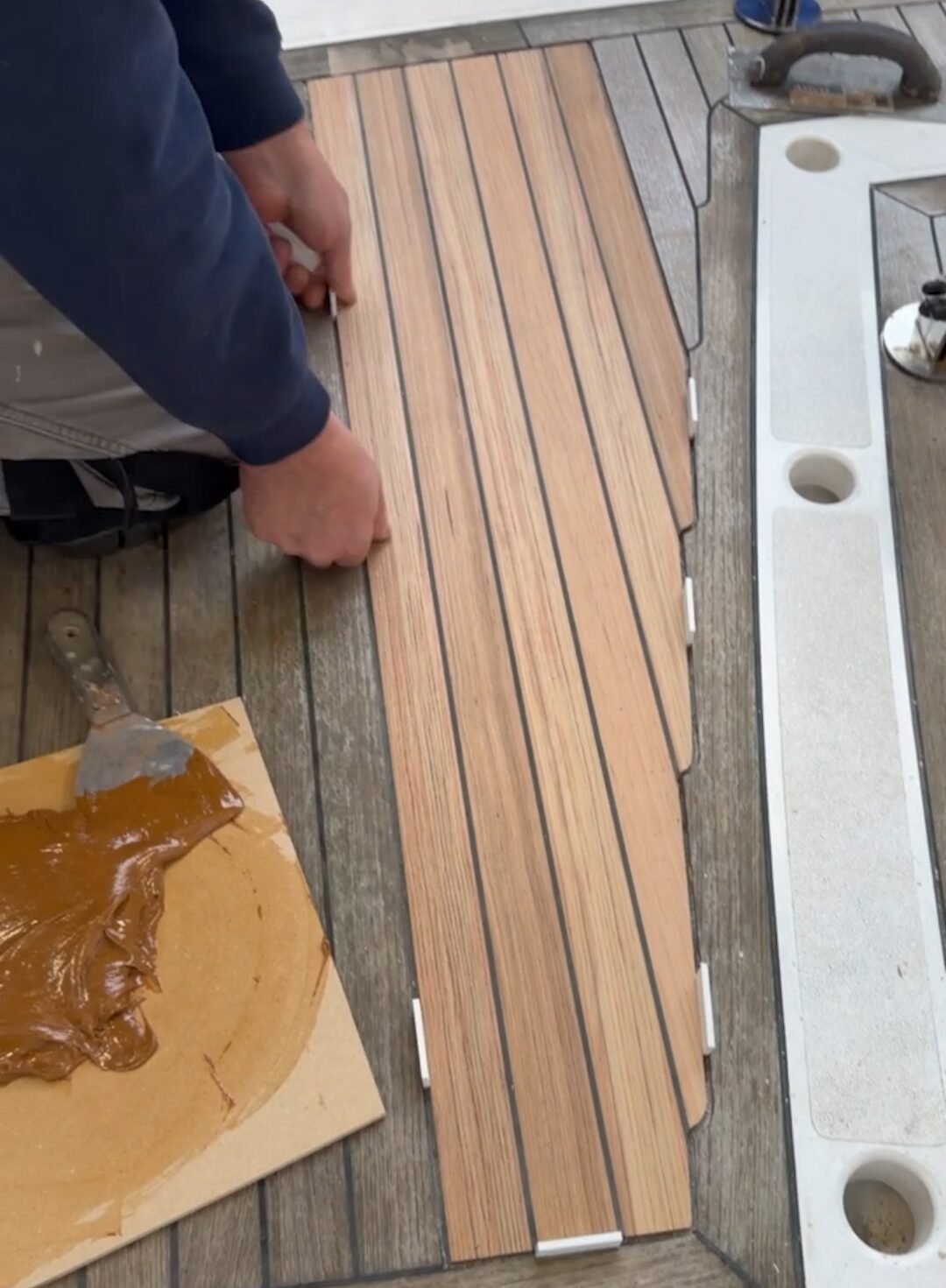
Targeted repairs make the most sense when the problem is isolated and the rest of the deck is in good enough condition to support a lasting repair. Depending on the condition and construction of the deck, work may include replacing individual damaged planks, renewing failed caulking, or addressing areas where the teak has lost its bond to the surface below.
A single damaged plank does not automatically mean the surrounding teak needs tobe removed. Similarly, a failing seam may be repairable without replacing otherwise serviceable wood. In either case, the work should address what caused the damage.
What Can a Targeted Repair Accomplish?
A well-planned repair can preserve sound teak while addressing the areas that need attention. It can also help prevent a local problem from affecting more of the deck structure.
Caulking is a good example. The flexible material between planks helps seal the joints against water. When it separates from the wood or develops gaps, moisture can find a path beneath the surface. Identifying and repairing failing seams early can help limit further deterioration and may avoid more extensive, costly work later.
However, repairs have limits. They cannot restore thickness already lost from the wood, and surface work alone cannot resolve deterioration beneath the deck. The expected result should reflect the condition of the deck as a whole.
When Is Replacement Worth Discussing?
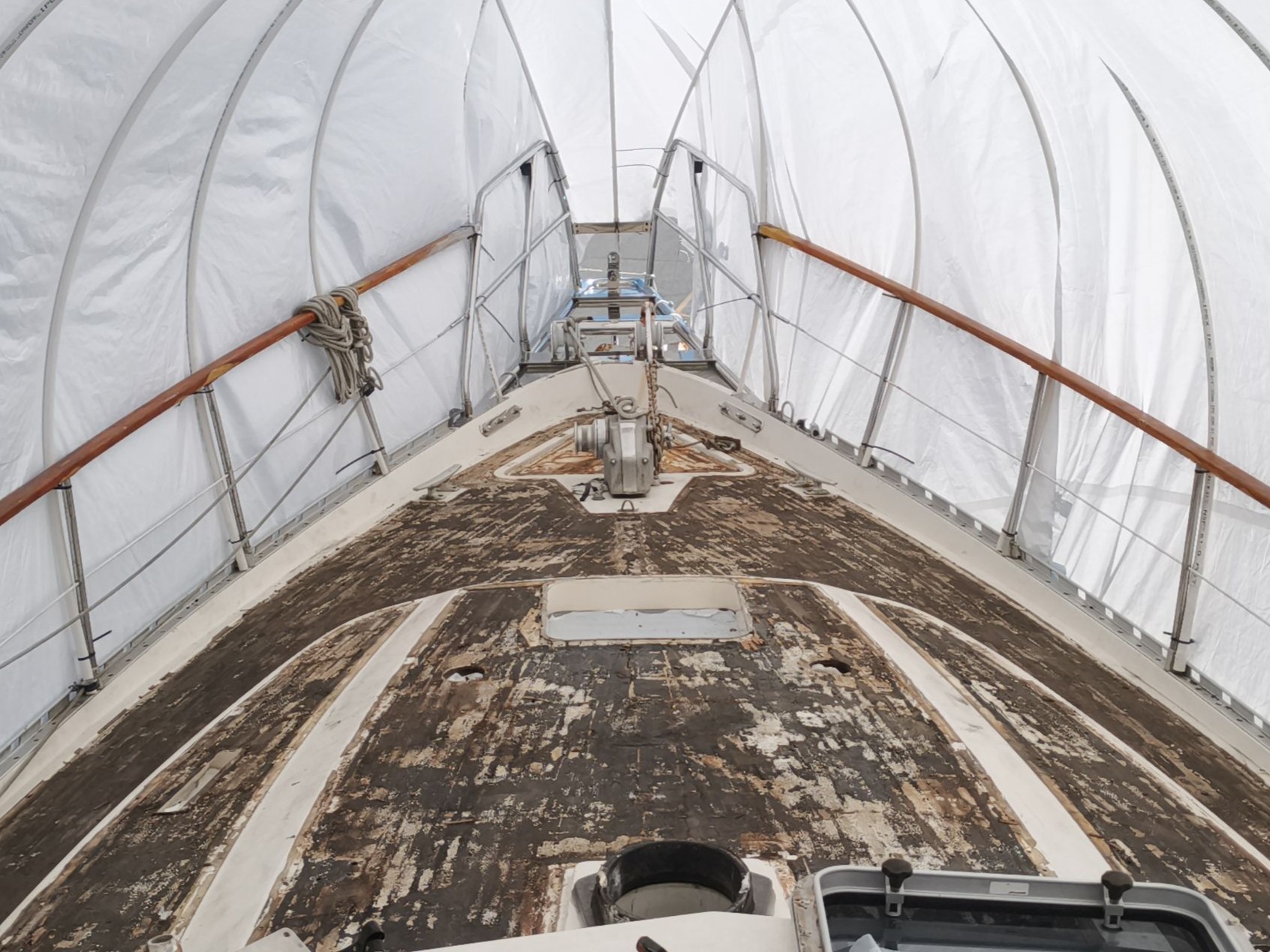
Replacement becomes a more relevant discussion when problems extend beyond a few isolated areas, or when the remaining materials can no longer support a durable repair.
Signs that warrant a closer look include:
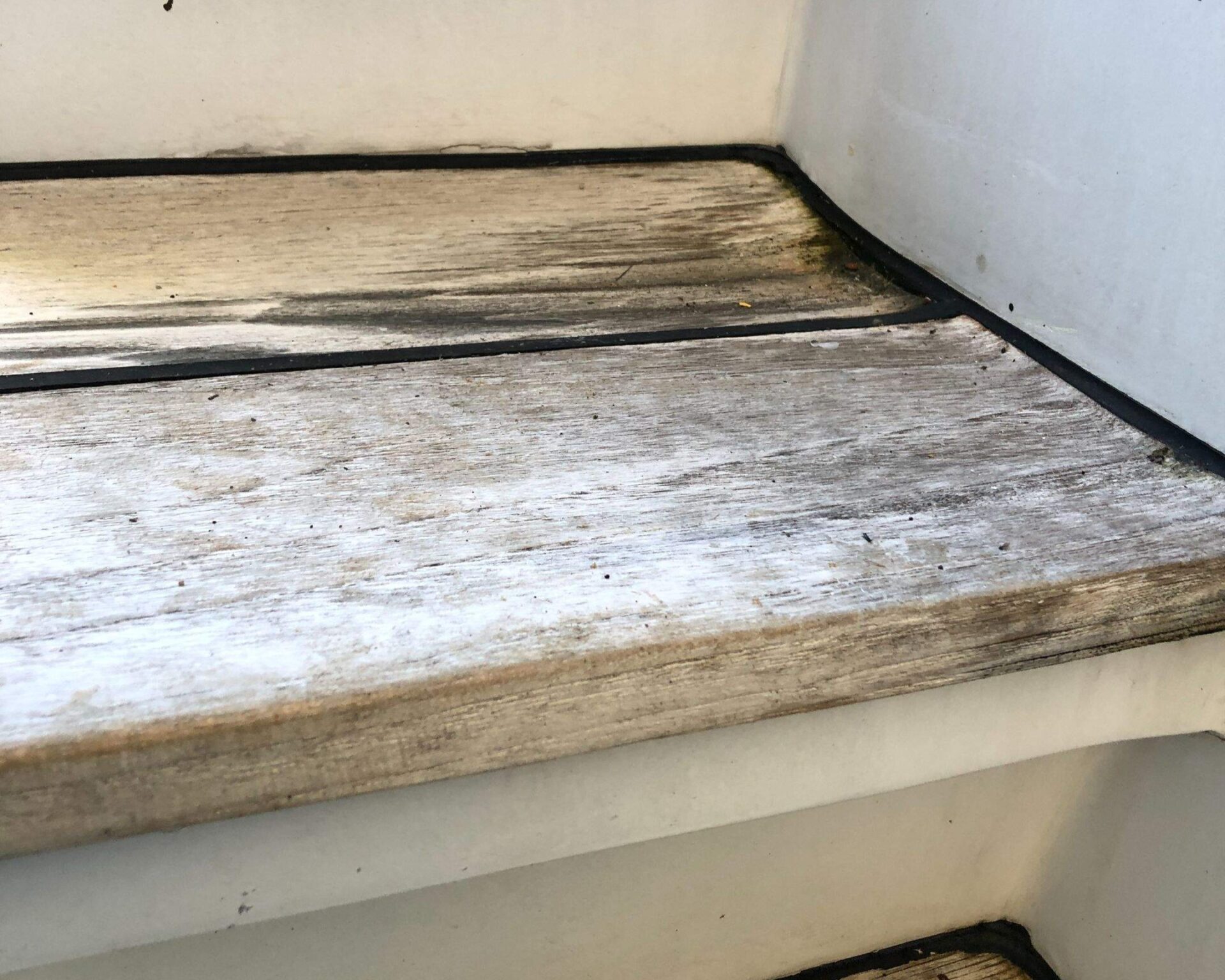
- Widespread wear: The teak has become thin or uneven across substantial areas.
- Extensive loss of adhesion: Multiple sections have become loose or detached from the surface beneath them.
- Recurring seam problems: Repairs continue to fail, suggesting that the cause needs further investigation.
- Concerns beneath the teak: Moisture or deterioration may require decking to be removed so the underlying area can be assessed and repaired.
Remaining wood thickness and the extend of adhesive failure are important considerations when weighing repair against replacement. There is no single visual test that can settle the decision for every deck.
Replacement doesn’t always mean removing all of the teak decking. An inspection may identify only one section that requires replacement, while the rest remains serviceable.
Why the Condition Beneath the Teak Matters
The condition of your deck goes beyond what’s visible on the surface. The wood, caulked seams, adhesive, and underlying deck each play a role in how it performs.
A problem in one layer can affect another. Failed seams can allow water beneath the teak, while problems with adhesive can leave planks poorly secured. Renewing visible surface without addressing those conditions may leave the original issue unresolved.
Where hidden damage, such as rot in an underlying wood layer, is suspected, some removal may be needed before the full scope of work can be confirmed.
Choosing a Scope That Makes Sense
Beyond whether a repair is possible, it’s worth asking what it will achieve and whether it make sense for the condition of the rest of the deck.
For an otherwise serviceable deck with a localized issue, targeted work may be a practical way to preserve what’s already there. For a deck with widespread wear or repeated failures, a larger project may offer better long-term value.
Owners should come away from a discussion or inspection understanding:
- Which areas need attention and why
- What parts of the deck can be retained as it
- What the proposed repair is expected to accomplish
- Whether any hidden conditions could change the scope
Clarity helps turn a problem in to a manageable plan.
Start with an Assessment
An assessment helps establish whether the issue is isolated or part of a broader problem, giving you a clearer starting point for planning the work.
At West Bay Shipyards, we can assess your teak deck and discuss whether targeted repairs or a broader scope would best suit its condition and your plans for the vessel.
FAQ: Teak Deck Repair vs. Replacement
Can individual teak deck planks be replaced?
Yes. If damage is limited to a few planks and the surrounding deck is in good condition, individual plank replacement may be possible. The repair should also address any underlying issue that contributed to the damage, to ensure it doesn’t happen again.
Does failing caulking mean my deck needs replacing?
Not necessarily. Failed caulking can often be removed and replaced while retaining serviceable teak. The remaining wood thickness, condition of the seams, and any evidence of moisture beneath the surface can help determine whether re-caulking is enough, or further repair is required.
How do I know if my teak deck needs repair or replacement?
Open seams, damaged planks, loose sections, or widespread wear are all reasons to have your deck addressed. An inspection helps establish how extensive the problem is, what can be retained, and whether targeted repairs can provide a lasting result.
Can sanding restore a worn teak deck?
Sanding may improve the surface where sufficient teak remains, but it’s mostly a cosmetic service than a maintenance one. Sanding the deck removes material and lost thickness can not be restored. It also cannot resolve issues like failed adhesion, deterioration, or rot beneath the deck planks. The decks condition should always be assessed before sanding is recommended.
Can one section of my teak deck be replaced without replacing the whole deck?
Depending on the deck’s layout and construction, a single area may be replaced while other sections are retained. The condition of adjoining teak and the transitions between sections will help determine whether this approach is practical.
How long will teak deck repair last?
There is no single lifespan for every repair. Durability depends on the surrounding decks condition, whether the cause of damage has been properly addressed, and ongoing maintenance.
Damaged teak? Not sure whether to repair or replace?
Our team can assess its condition and help you understand whether targeted repairs or a broader scope makes sense for your vessel.